By Glenn Agung Hole, Ph.D.
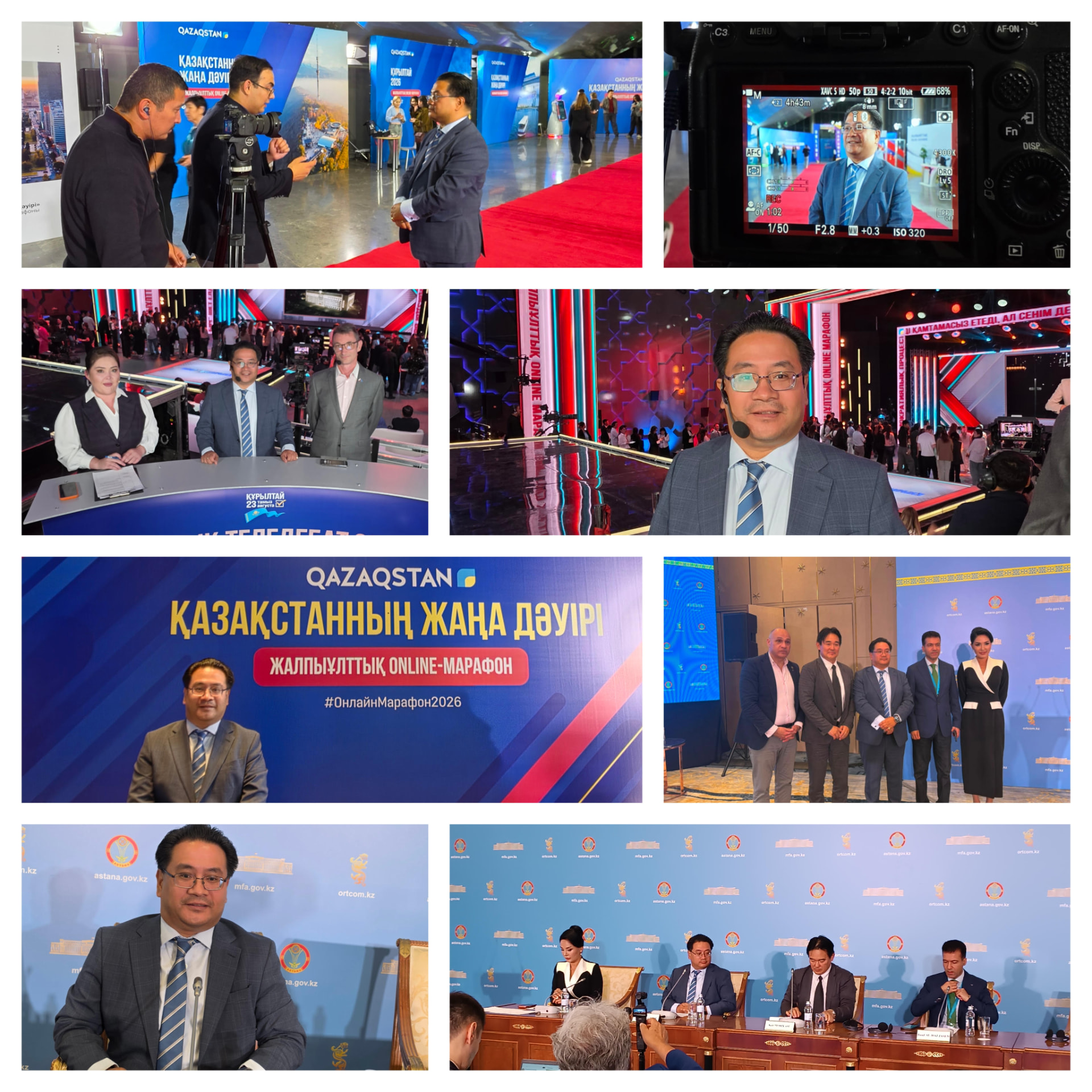
Within 24 hours, Dr Glenn Agung Hole's institutional analysis of Kazakhstan's parliamentary election was featured across 35 published media pages in seven languages.
The coverage connects a Norwegian institutional perspective with Kazakhstan's political transformation and has appeared in Kazakh, Russian, English, Chinese, Turkish, Uzbek and Kyrgyz.
The countries represented through this international and multilingual reach are Norway, Kazakhstan, Russia, China, Türkiye, Uzbekistan and Kyrgyzstan, alongside broader global audiences reached through English-language media and international news platforms.
The scale of this coverage is significant—but the more important question is why the institutional perspective has attracted such extensive interest.
Most election commentary focuses on election day: how voting is organised, who participates and who enters parliament. Institutional analysis begins where that commentary often ends.
The central question is not merely whether political structures change, but whether those changes strengthen the state's capacity to convert political decisions into credible laws, effective implementation and tangible outcomes for citizens.
This is the essence of institutional capital: the accumulated capacity embedded in a society's rules, organisations, knowledge, trust, leadership and implementation systems. Institutional capital determines whether constitutional reform remains a formal redesign—or becomes a productive national asset.
Kazakhstan's first parliamentary election to the new unicameral Kurultai therefore represents more than the formation of a new legislature. It is a practical test of whether the country's evolving political architecture can strengthen accountability, improve legislative quality, represent diverse societal interests and create greater predictability for citizens, businesses and international investors.
Dr Hole's analysis has attracted attention because it connects parliamentary reform with policy areas too often examined separately: education, artificial intelligence, energy capacity, infrastructure, entrepreneurship, investment and Kazakhstan's strategic position between Europe and Asia.
These are not independent sectors. Artificial intelligence requires energy and human capital. Innovation requires education, infrastructure and access to investment. International investors require legal certainty and institutional predictability. Strategic autonomy requires a state capable of coordinating these elements over time.
The decisive issue is therefore not the number of laws adopted by the new Kurultai, but the quality of the institutional transmission mechanism: whether citizens' priorities become political representation, whether representation produces coherent legislation, and whether legislation generates measurable economic and societal results.
Among the media platforms covering or reproducing Dr Hole's perspectives are Silk Way TV, The Astana Times, Kazinform, BAQ.KZ, DKNews, Azattyq Rýhy, EL.KZ, Inbusiness.kz, Ortcom, Aikyn, Turkystan, Liter, Toppress, Egemen Times and 24KZ, alongside international republication and news aggregation platforms.
For The Institutional Capital Project, the wider significance is clear: political reform creates lasting value only when it strengthens institutional capability, public trust, economic predictability and national resilience.
An election may establish a new parliament. Institutional capital determines what that parliament ultimately enables a society to achieve.
#InstitutionalCapital #Kazakhstan #InstitutionalEconomics