By Glenn Agung Hole, Ph.D.
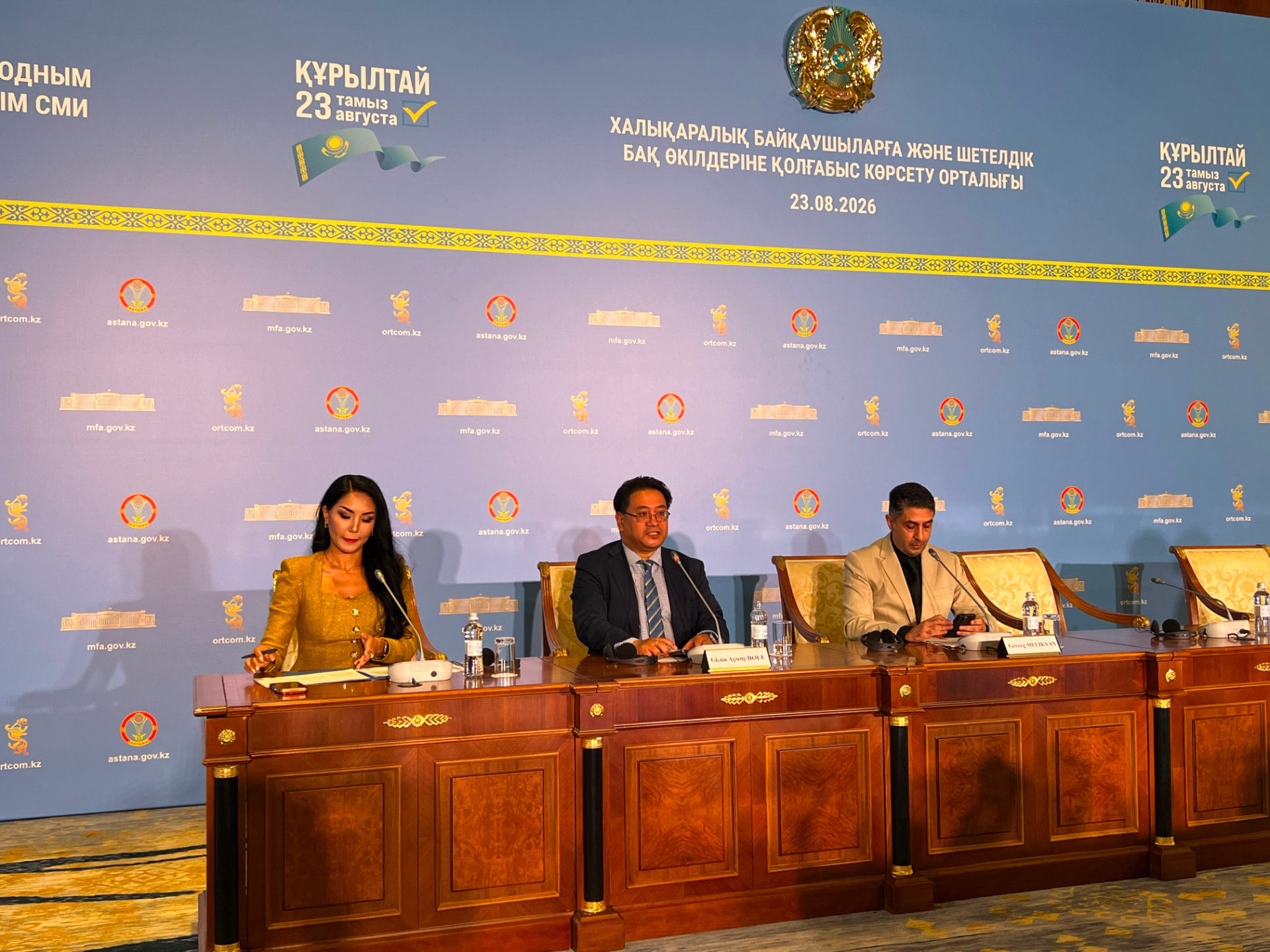
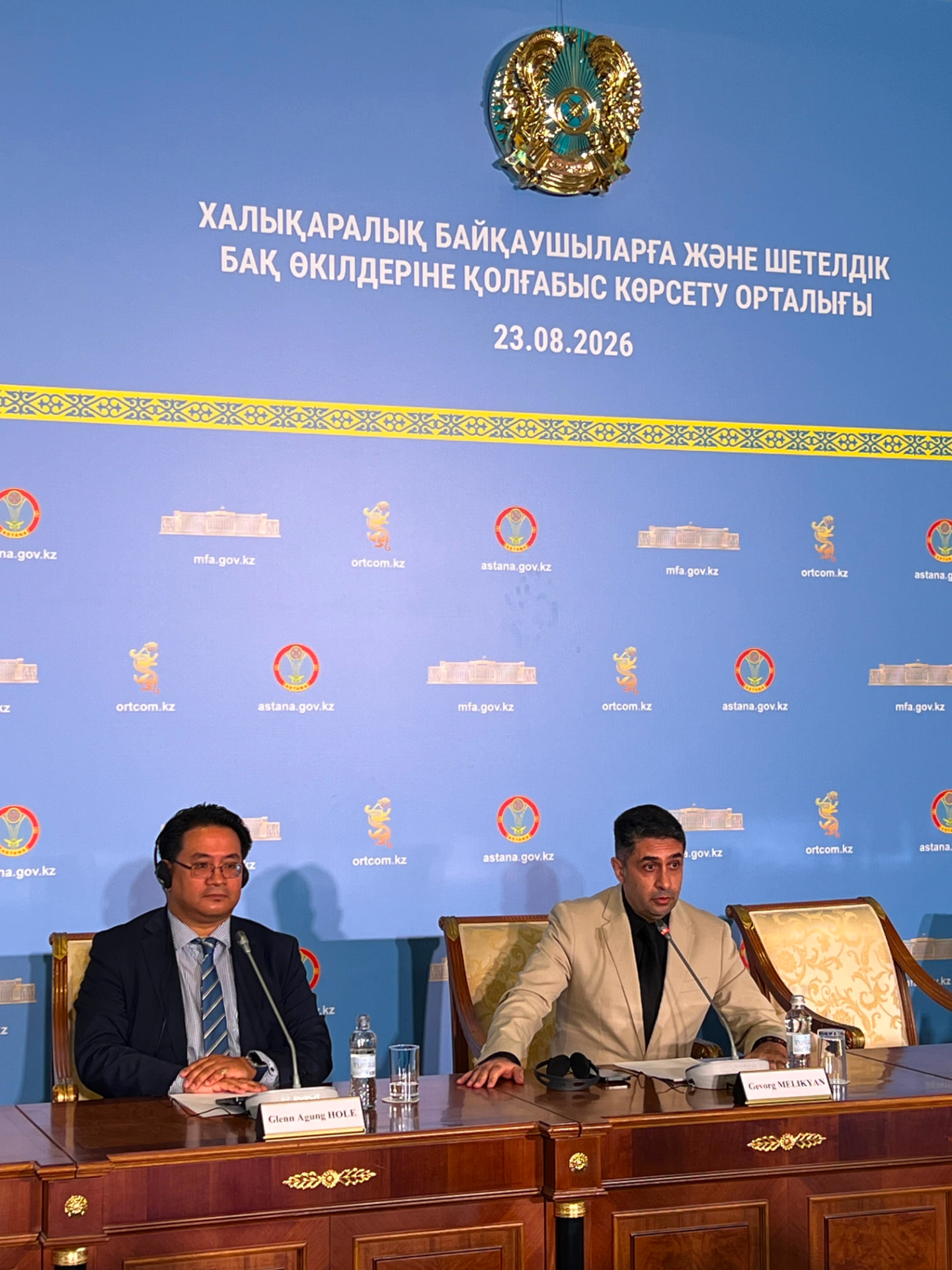
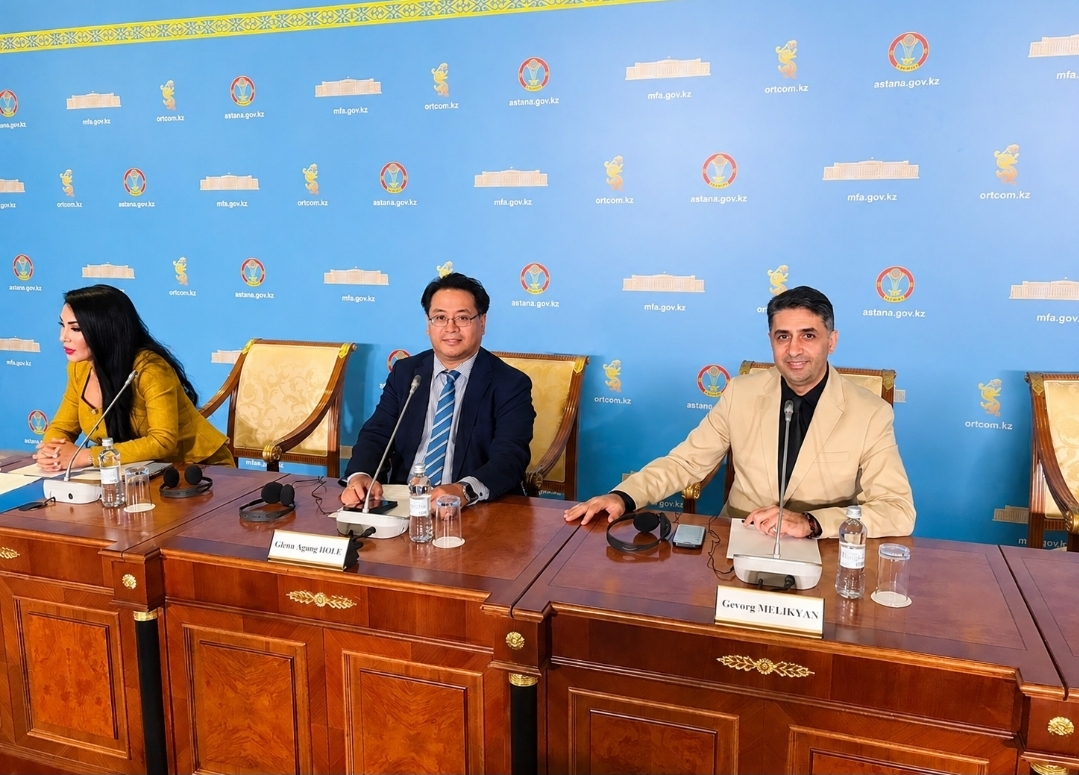
Today in Astana, Dr. Glenn Agung Hole, institutional economist, academic and geopolitical analyst, delivered his concluding reflections following Kazakhstan's parliamentary election.
His central argument was that the most consequential questions begin after the votes have been counted.
From an institutional economics perspective, elections determine representation, but institutions determine whether political ambition can be converted into accountability, implementation capacity and sustained national development.
Drawing on his discussions in Astana with academics, policy experts, international colleagues, media representatives and citizens, Dr. Hole argued that Kazakhstan's political reform, economic transformation and geopolitical positioning should not be analysed separately.
Education, artificial intelligence, energy, infrastructure, investment and connectivity constitute interdependent components of national capacity.
AI provides a particularly important example. Technological ambition requires human capital. Human capital requires universities, research and skills. Computing capacity requires data centres. Data centres require reliable energy. Energy requires infrastructure and long-term capital.
Capital, in turn, depends upon something less visible but equally fundamental: institutional credibility.
National ambition without institutional capacity remains aspiration.
Dr. Hole further argued that institutional capacity must be understood not only as an economic asset, but increasingly as a geopolitical capability.
Kazakhstan occupies a strategically significant position at the heart of Eurasia — between Russia, China and Europe, while the United States is increasing its engagement in Central Asia and the Middle Corridor is strengthening Kazakhstan's role in Eurasian connectivity.
Yet Kazakhstan should not be understood merely through the strategic interests of larger powers. Kazakhstan has its own interests, its own institutions and its own strategic choices.
Geography creates opportunity, but it can also create dependency. The decisive institutional question is therefore whether geographic importance can be converted into strategic optionality.
Multiple transport corridors create alternatives. Reliable energy increases economic freedom. Strong universities and domestic expertise reduce knowledge dependence. Diversified trade and investment relationships reduce exposure to individual external powers. Credible institutions expand the range of strategic choices available to the state.
Dr. Hole summarised this relationship in three steps:
- Institutional capacity creates strategic capacity.
- Strategic capacity creates optionality.
- Optionality expands national freedom of action.
For Kazakhstan, this relationship is particularly significant. A multi-vector foreign policy becomes more credible when supported by a multi-vector economic and institutional architecture: diversified trade, multiple transport corridors, reliable energy, domestic human capital, institutional credibility and access to different sources of technology and investment.
From this perspective, yesterday's election represents not an endpoint, but an institutional test.
The new parliamentary structure should ultimately be evaluated not simply by its formal design, but by its institutional performance: whether it strengthens accountability and representation, increases transparency and predictability, improves implementation capacity and contributes to the gradual accumulation of public trust.
Formal institutions are not necessarily effective institutions.
Institutional capital emerges when rules, capabilities, legitimacy and trust reinforce one another over time.
Kazakhstan possesses significant natural resources and occupies one of Eurasia's most strategically important geographic positions. But resources and geography are endowments. Institutions determine whether those endowments can be converted into national capability.
The deeper challenge is therefore one of institutional conversion capacity: converting education into innovation, energy into industrial and digital capability, infrastructure into connectivity, investment into productive capacity, and political reform into institutional legitimacy.
Ultimately, the question is whether these capabilities can be converted into greater strategic autonomy.
Yesterday, Kazakhstan voted. Today, the longer institutional process continues: the accumulation of institutional capital.
Political ambition must become institutional capacity. Institutional capacity must become strategic capability. Strategic capability must expand national freedom of action.
Institutional capital is therefore not merely a foundation for economic development. It is increasingly a foundation for strategic autonomy.
#InstitutionalCapital #InstitutionalEconomics #Geopolitics