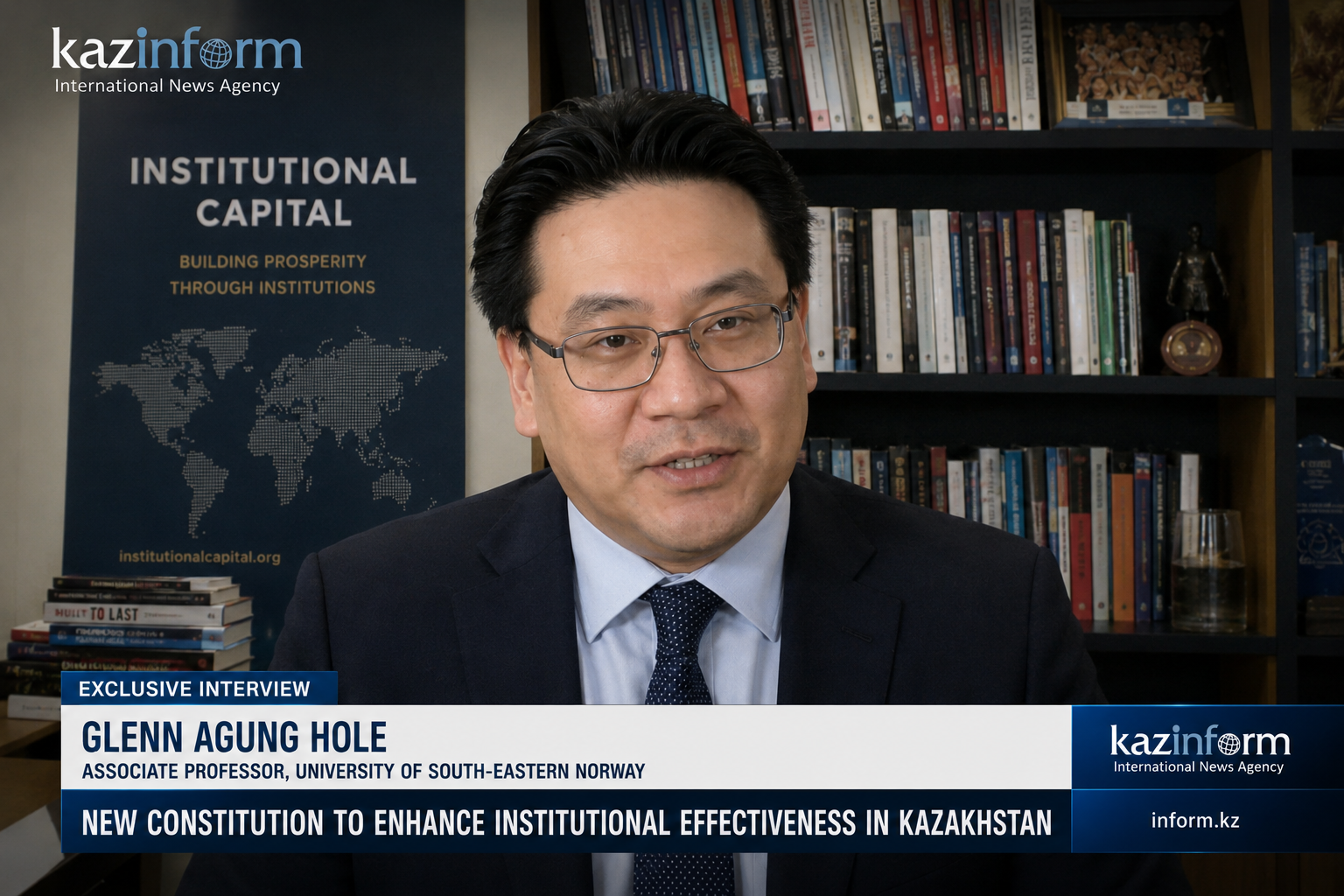
Today, Dr. Glenn Agung Hole, Associate Professor at the University of South-Eastern Norway (USN), Honorary Professor at Sarsen Amanzholov East Kazakhstan University, and Founder of The Institutional Capital Research Programme, was interviewed by Kazinform, Kazakhstan's national news agency, and the international broadcaster Silk Way TV on the strategic implications of Kazakhstan's new Constitution, which entered into force on 1 July 2026.
The interviews focused on a fundamental question:
How will Kazakhstan's constitutional reform influence the country's institutional development, investment climate, international credibility, and long-term strategic competitiveness?
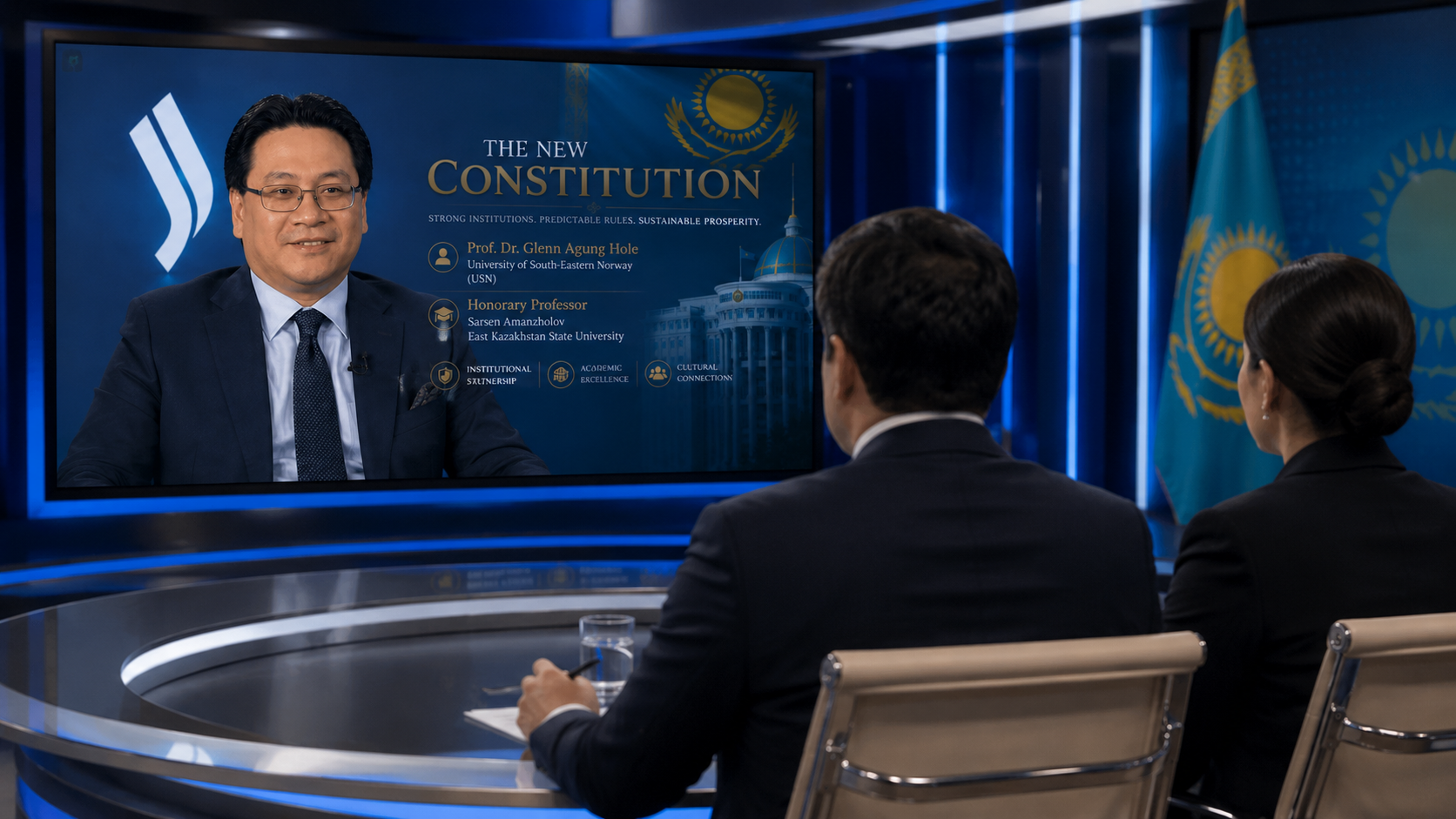
According to Dr. Hole, the entry into force of Kazakhstan's new Constitution should not be seen as the completion of constitutional reform, but as the beginning of a new institutional phase.
While constitutions establish the formal rules of the game, their long-term value depends on whether those rules are consistently translated into everyday governance through effective public institutions, judicial independence, regulatory predictability and the rule of law.
From an institutional economics perspective, the principal purpose of constitutional reform is to reduce uncertainty.
That uncertainty matters because investors, entrepreneurs, businesses and international partners ultimately evaluate not only constitutional principles, but the credibility of the institutions responsible for implementing them.
Dr. Hole argued that Kazakhstan's long-term competitiveness will increasingly depend on its ability to build Institutional Capital — the accumulated stock of trust, legal certainty, institutional effectiveness, administrative capacity and policy predictability that enables societies to sustain investment, innovation and economic resilience.
As global competition increasingly shifts from natural resources toward institutional quality, countries that combine strategic geography with strong institutions will enjoy a significant competitive advantage.
Kazakhstan's geographic position between Europe and Asia already provides important geo-economic opportunities.
A successful implementation of the new Constitution could further strengthen Kazakhstan's position as a trusted regional partner, an attractive investment destination and an increasingly important bridge between Europe and Asia.
However, Dr. Hole emphasised that constitutional reform should ultimately be judged not by the constitutional document itself, but by the quality of its implementation.
"Constitutions establish the formal rules of the game. Institutions determine whether those rules create trust. Kazakhstan's constitutional reform has created a historic opportunity. Its long-term success will depend on whether constitutional principles become institutional practice."
Read the Kazinform interview: inform.kz →
#Kazakhstan · #InstitutionalCapital · #InstitutionalEconomics · #Geoeconomics · #Governance · #RuleOfLaw · #StrategicCompetitiveness